
Key takeaways
- Peppermint oil gives a cool, fresh feeling on skin and scalp and has an energising minty scent.
- Yes, the oil is an essential oil: it is steam-distilled from the peppermint plant (Mentha × piperita). Its cooling comes mainly from menthol.
- It is strong. Pure peppermint essential oil must be diluted before it touches skin.
- Never use the oil on the face or near the nose of babies and young children.
- Never drink peppermint essential oil. The capsules studied in research are a different, medical product.
In this guide
Peppermint oil is used mainly for the cool, refreshing feeling it gives skin and scalp, and for its energising scent. It is one of the most useful oils for a home massage, and one of the strongest, so how you use it matters. This guide covers what peppermint oil is, its real benefits, how to use it on skin, face, scalp and in a diffuser, its side effects, child safety, and how to tell a real one.
Is peppermint oil an essential oil?
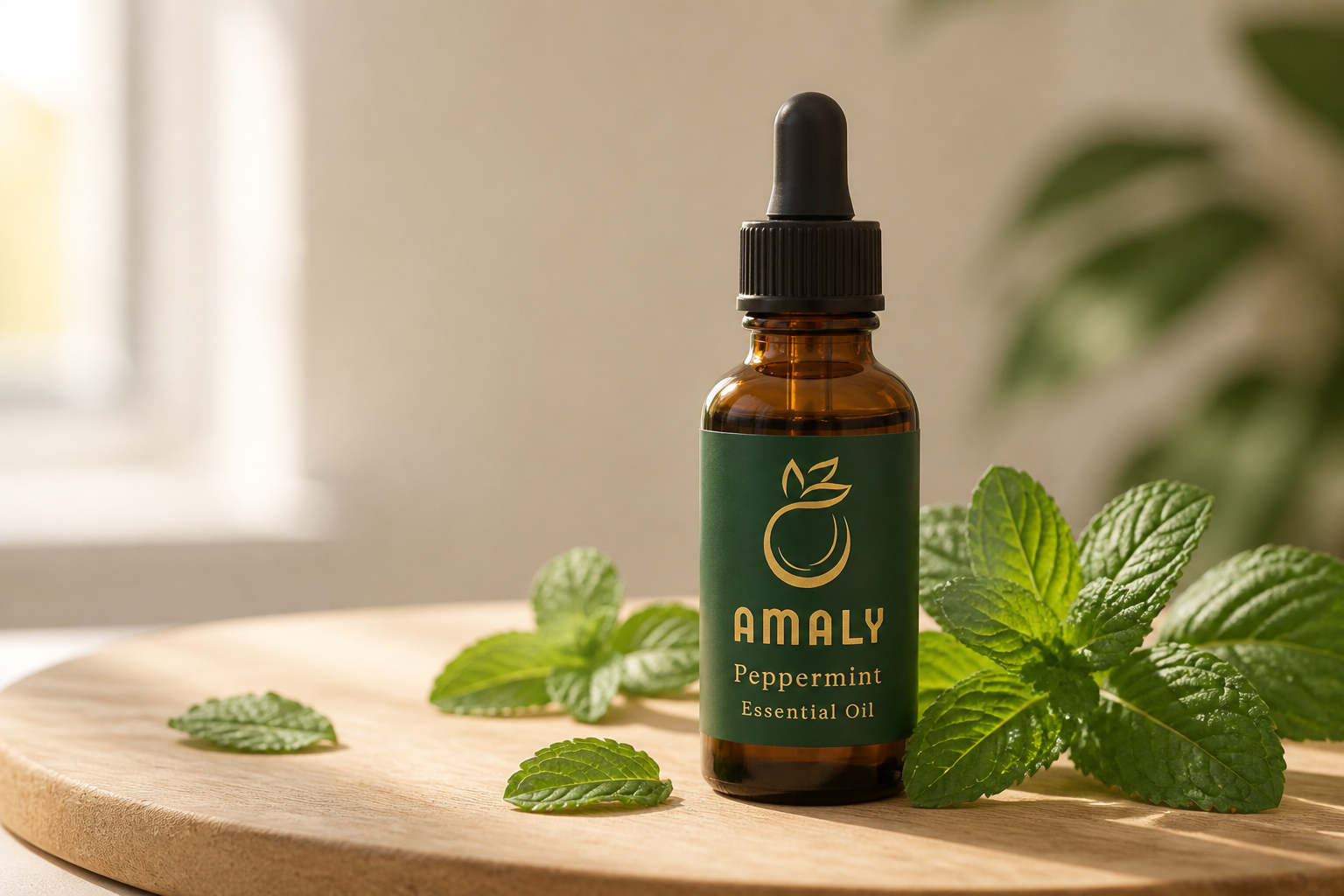
Yes. Peppermint essential oil is steam-distilled from the leaves of the peppermint plant, Mentha × piperita. In Arabic it is often called زيت النعناع الفلفلي. Its main compound, menthol, gives the famous cool feeling.
But “peppermint oil” can mean different products:
- Pure peppermint essential oil: very concentrated. Never on skin without diluting.
- Ready-to-use peppermint oil: a small amount of essential oil blended in a carrier oil, made for skin.
- Peppermint capsules: a medical product taken by mouth, only on a doctor’s advice. Not the same as the oil in a bottle.
- Mint-scented oil: a plant oil with mint fragrance added.
Peppermint oil benefits: what it really does
These are the peppermint essential oil benefits that are honest to promise:
- A cooling, fresh feeling on skin and scalp.
- An energising scent: many people like it in the morning or during a study or work break.
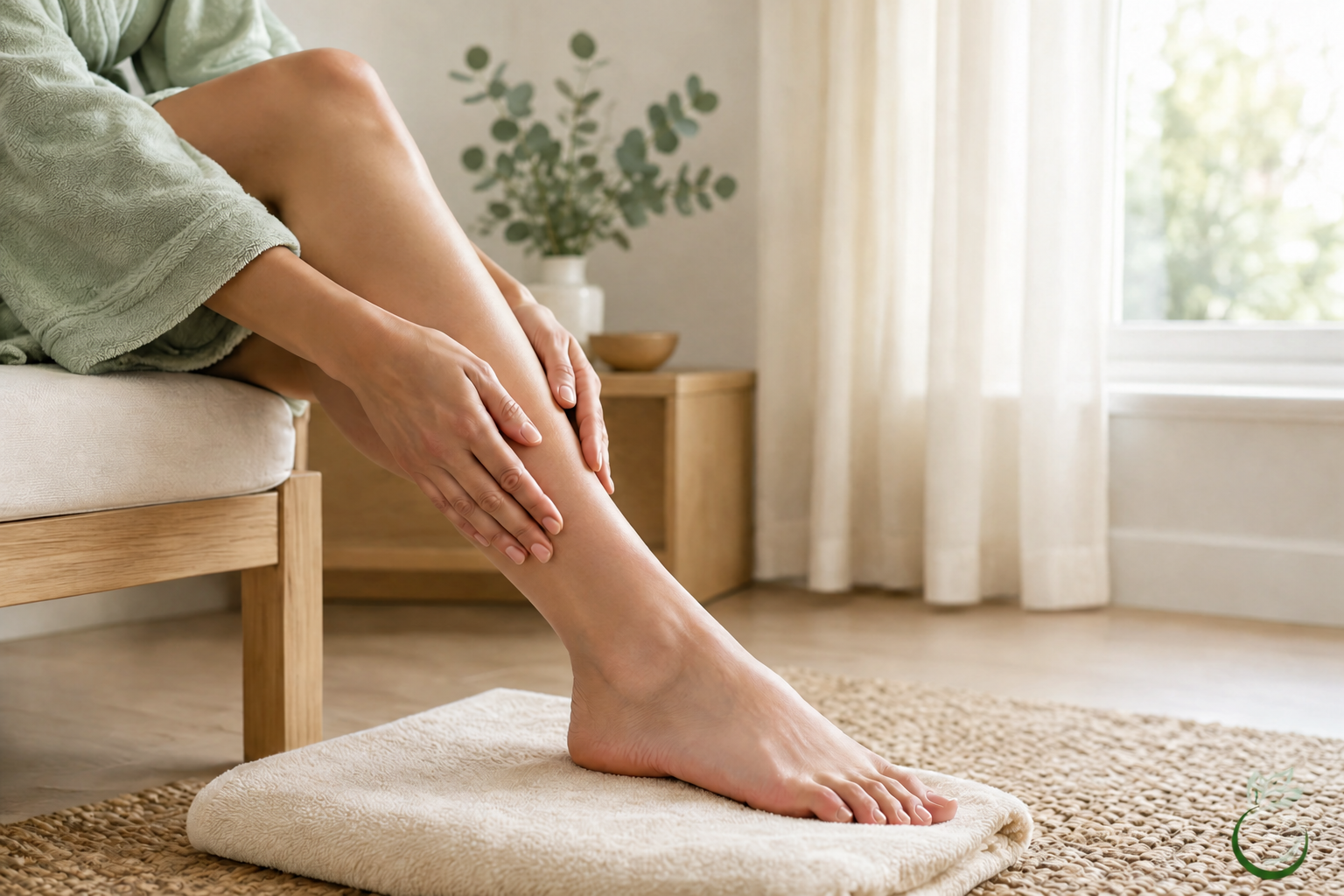
- A refreshing massage: on tired legs, feet, neck and shoulders after a long day or the gym.
- A clean, fresh scalp feeling when a few drops go into shampoo.
- Fresh feet: a cool foot massage on a hot day.
What does research say about peppermint oil?
The US National Center for Complementary and Integrative Health (NCCIH) explains that most good research on the oil is about special capsules taken by mouth for the stomach and gut, used under medical advice. Very little research has looked at the oil used on the skin at home.
So the cool feeling is real, but the oil is not a treatment. If you have pain, headaches or stomach problems that keep coming back, please see a doctor.
Peppermint oil for skin
- Patch test first: put a little diluted oil on the inside of your arm and wait 24 hours.
- Dilute: mix 1 drop of pure peppermint essential oil in 1 teaspoon (5 ml) of carrier oil (about 1%). Up to 2 drops in 5 ml (about 2%) for the body. A ready-to-use blend is already diluted.
- Massage: rub into tired legs, feet, neck or shoulders.
- Wash your hands after use, and do not touch your eyes.
For a larger area, mix with coconut oil or sesame oil. For a stronger cool massage, Amaly peppermint and camphor oil is a ready-made blend.
Peppermint oil for face
Peppermint is one of the strongest oils for the face, so be careful:
- Only very diluted (1 drop in at least 5 ml carrier oil), or a ready-to-use oil, after a patch test.
- Keep it well away from the eyes. The cooling vapour alone can sting.
- Skip it on sensitive, dry or irritated skin. A plain carrier oil is kinder.
- Never on the face or near the nose of babies and young children.
Peppermint oil for hair and scalp
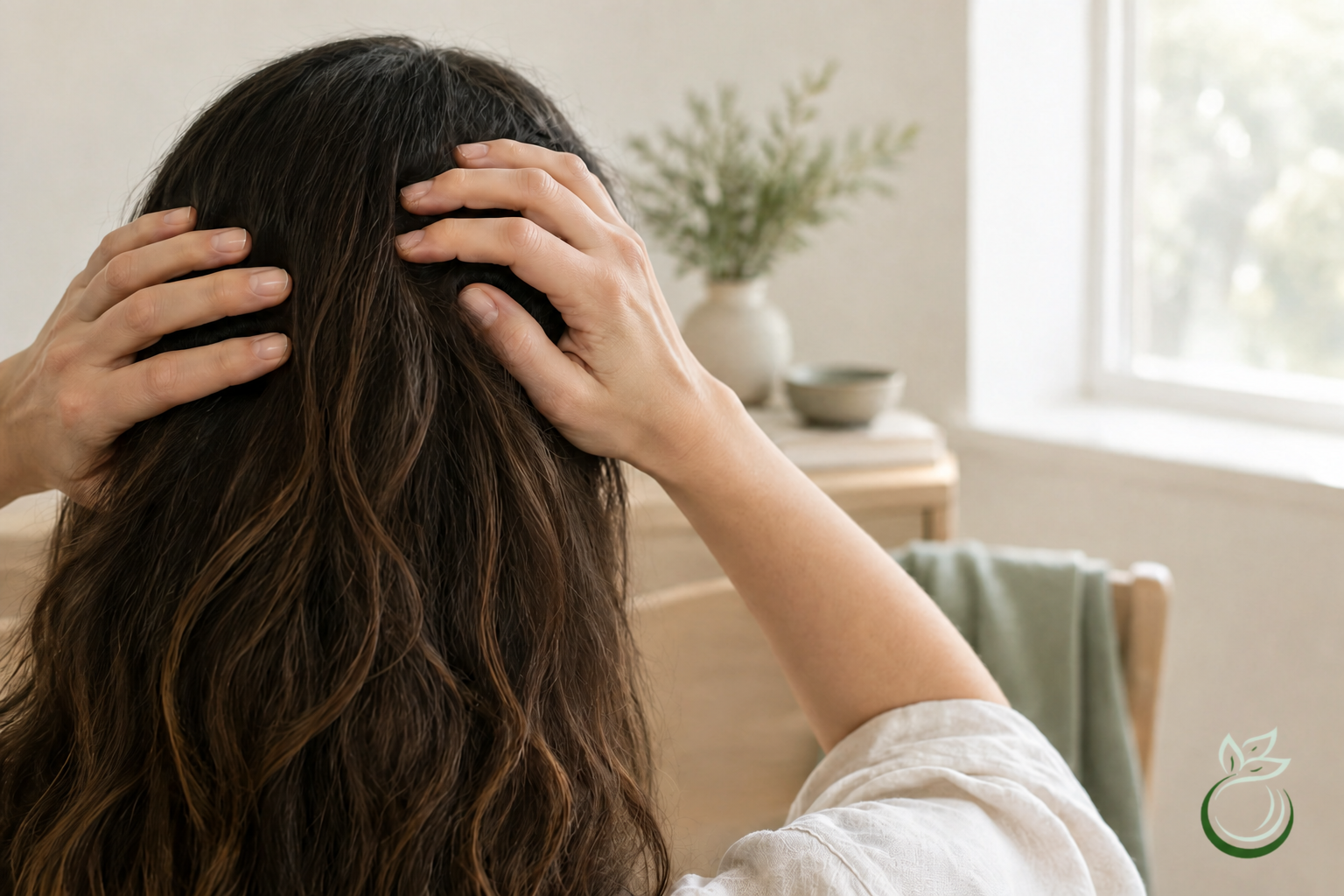
“Peppermint oil for hair” is one of the biggest searches in Egypt. What it honestly does: it gives the scalp a cool, fresh, clean feeling.
- In shampoo: 2-3 drops of pure oil in one wash of shampoo, not in the whole bottle. Rinse well and keep away from the eyes.
- Scalp massage: a few drops of ready-to-use oil, or 1-2 drops of pure oil in 5 ml of carrier oil, massaged in for a few minutes before washing.
- If you are losing a lot of hair or your scalp is itchy or flaky most of the time, see a dermatologist.
How to use peppermint oil, step by step
If this is your first bottle, these five steps keep it simple and safe.
- Read the label. It should say whether the oil is pure or ready to use. Pure oil is never used straight on the skin.
- Dilute pure oil. 1-2 drops in 5 ml (one teaspoon) of a carrier such as coconut oil or sesame oil. That is about 1-2%.
- Patch test. Put a little of the mix on the inside of your forearm and wait 24 hours.
- Use a small amount. Keep it away from the eyes, and wash your hands well afterwards.
- Stop if it stings. A cool tingle is normal. Burning, redness or itching is not: wash the area with a little carrier oil, then soap and water.
Peppermint oil for headache: a cool feeling on the temples
Many people reach for this oil when their head feels heavy after a long day at the screen. The cool feeling on the temples is what they like. The NCCIH describes the research on headaches as small, so treat it as a comfort, not a medicine.
- Mix 1 drop of pure oil in a teaspoon of carrier oil, or use a ready-to-use oil.
- Rub a little on the temples and the back of the neck. Never on the forehead close to the eyes, and never on children.
- Take a break from the screen, drink water and rest your eyes too.
If your headaches are frequent, strong, new for you, or come with other symptoms, see a doctor.
After the gym, the desk or a long day on your feet
Three groups ask about this oil the most: people who train, people who sit at a desk all day, and people who stand all day. A cool massage suits all three.
- Neck and shoulders after desk work: a few drops of ready-to-use oil, slow circles from the base of the skull down to the shoulders for 3-5 minutes. Stretch and change your sitting position too.
- Tired, heavy legs and feet: massage upwards from the ankle to the knee, then put your feet up for ten minutes.
- After training: massage the worked muscles after your shower. The peppermint and camphor blend gives a stronger cool feeling.
- A parent’s stiff knees: a gentle massage can feel nice, but only on unbroken skin, and ask their doctor first if they have a chronic condition or take regular medicines.
Back pain that comes every day, swelling, or pain after a fall needs a doctor, not an oil.
A fresh scent for study and long drives
- Exam season: run a diffuser for 30 minutes in the study room, then air the room. Many students also pair it with rosemary or lemon.
- Long drives: a passenger can smell a drop on a tissue. Keep the bottle closed while the car is moving.
- Feeling sick when travelling: some people find the smell refreshing, but the evidence is limited. If you are pregnant or often feel sick, ask a doctor.
Oils that blend well with peppermint
Peppermint is strong, so it works best as one small part of a blend. Keep the total number of essential oil drops the same as for peppermint alone. For example, in 10 ml of carrier oil: 1 drop of peppermint and 2 drops of lavender.
- Lavender: softens the sharp smell for an evening massage. See our lavender oil guide.
- Rosemary: a popular scalp pair. See our rosemary oil guide.
- Eucalyptus: a fresh, open smell for the diffuser. See our eucalyptus oil guide.
- Lemon: bright and clean for a study room or a home spray. Check the sun advice in our lemon oil guide before using it on skin.
More ways to use it
- Foot soak: a few drops of ready-to-use oil in a bowl of warm water after a long day.
- Study or work break: a drop on a tissue to smell for a fresh, awake feeling.
- Travel: some people like to smell peppermint on a tissue on long drives. If you often feel sick when travelling, ask a doctor.
- Home: a few drops in water for a fresh-smelling cleaning spray.
| Use | Pure peppermint essential oil | Mix with |
|---|---|---|
| Face (adults) | 1 drop | At least 5 ml carrier oil |
| Body / massage | Up to 2 drops | 5 ml carrier oil |
| Shampoo | 2-3 drops | One wash of shampoo |
| Diffuser | A few drops (pure only) | Water, as your diffuser says |
| Drinking | Never | |
Peppermint oil for diffuser
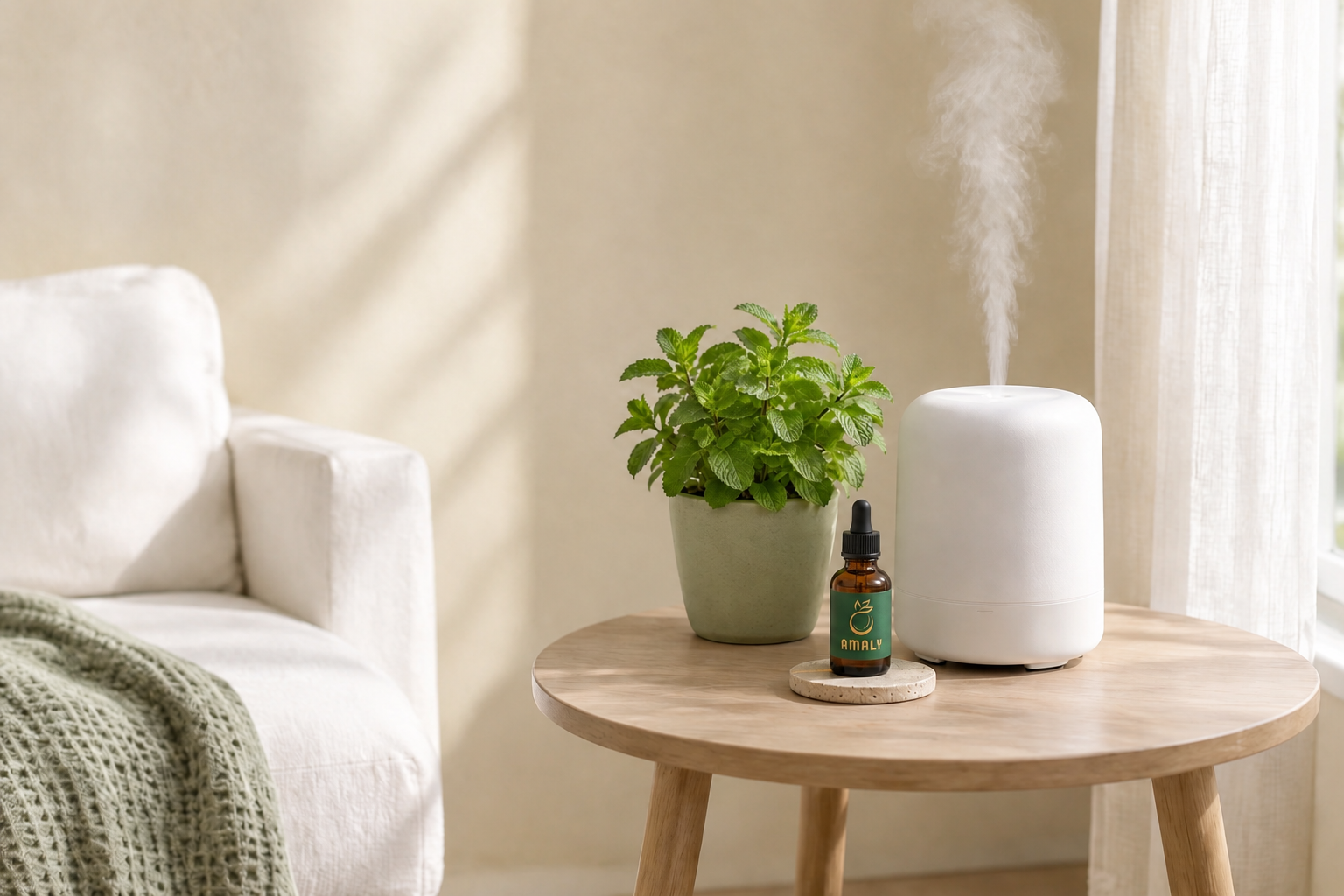
- Use a pure peppermint essential oil in a diffuser, not a ready-to-use oil. Most diffuser makers say not to put carrier oils in the water tank.
- Follow your diffuser’s instructions for the number of drops. Run it for 30-60 minutes, then turn it off, and keep the room ventilated.
- Do not diffuse peppermint near babies and young children.
- Keep diffusers away from pets.
Peppermint and camphor together
Peppermint and camphor are a classic Egyptian pairing for a cool massage. Both give a strong cooling, fresh feeling, so the blend is stronger than peppermint alone. Use it on the body only, never on the face, and never on children. Amaly peppermint and camphor oil comes ready to use for a massage after the gym or a long day.
Peppermint oil side effects
- Babies and young children: never on the face or near the nose. The US National Association for Holistic Aromatherapy advises against use under 30 months, and Germany’s Federal Institute for Risk Assessment (BfR) warns against it for children under 3. For older children, ask a doctor first.
- Skin irritation: pure oil can burn and redden skin. Always dilute and patch test.
- Eyes: keep away. If it gets in your eye, rinse with plenty of clean water and see a doctor if it still stings.
- Never drink it. If someone swallows peppermint essential oil, call a doctor or poison centre straight away.
- Pregnancy and breastfeeding: ask your doctor first.
- Regular medicines or a chronic condition: ask your doctor or pharmacist before using essential oils often.
- Pets: keep bottles and diffusers away from them.
For external use only. Not a substitute for medical advice.
Common mistakes to avoid
- Putting pure oil straight on the skin or the scalp.
- Adding drops to the whole shampoo bottle instead of one wash.
- Mixing it with water for the skin. Oil and water do not mix, so the drops sit on the skin undiluted.
- Touching your eyes or contact lenses after using it.
- Putting it on a baby’s chest or near a child’s nose.
- Running the diffuser all night in a closed bedroom.
- Keeping the bottle in a hot bathroom or in the sun.
Peppermint and pets
Cats are more sensitive to essential oils than people, and many vets advise against diffusing strong oils like peppermint around cats and birds. Keep bottles closed and out of reach, do not put oil on a pet’s skin or fur, and diffuse only in a room your pet cannot enter. If your pet drools, coughs or acts strangely after contact, call a vet.
Storage and shelf life
Light, heat and air slowly change the smell of essential oils. Keep the oil in a dark glass bottle with the cap tightly closed, in a cool cupboard, away from the sun and the stove, and out of children’s reach. Do not keep it in the bathroom. If the smell turns flat, sour or very different from when you opened it, replace the bottle. A ready-to-use oil also depends on its carrier oil, so check the date on the label.
Tips for every reader
- Just curious: this oil is the cool-smelling oil from the peppermint plant, mainly used for massage, scalp care and scent.
- First time with oils: start with a ready-to-use oil on the legs or feet, not the face.
- Gym-goers and active people: a cool massage after training. See the peppermint and camphor blend above.
- Office workers and students: a fresh scent on a tissue during a break. If headaches are frequent, see a doctor.
- Parents: keep peppermint away from babies’ and young children’s faces, and keep bottles out of reach.
- Pregnant or breastfeeding: ask your doctor before using any essential oil.
- Older adults: a gentle leg or foot massage, and ask a doctor first if you have a chronic condition or take regular medicines.
- Sensitive skin: stay at 1%, patch test, and skip the face.
- Hair care fans: a few drops in one wash of shampoo for a fresh scalp feeling.
- Spa and massage therapists: use low dilutions and ask clients about sensitive skin.
Common myths
Myth: you can drink peppermint essential oil for your stomach. Fact: research used special medical capsules. Never swallow essential oil.
Myth: more peppermint means more cooling, so it is better. Fact: too much can burn and redden skin.
Myth: peppermint oil is safe for kids because mint is natural. Fact: it is not for babies’ or young children’s faces.
Myth: peppermint oil grows hair. Fact: it gives a fresh scalp feeling. Ongoing hair loss needs a dermatologist.
How to tell if peppermint oil is real
- Latin name: Mentha × piperita (peppermint), not just “mint”.
- Pure or ready to use: the label should say which, and name the carrier oil if blended.
- How it was made: steam-distilled.
- Smell: sharp, clean and minty, strong even in small amounts. A sweet, candy-like smell suggests added fragrance.
- Bottle: dark glass with a dropper, a batch number and a date.
- Lab test: a GC-MS report from the seller is the best sign.
How much is peppermint essential oil in Egypt?
Peppermint is one of the more affordable essential oils, but prices still vary a lot, from the attar shop to specialist brands. Before you look at any price, check:
- Pure or ready to use: pure costs more per ml but must be diluted.
- Size: the price only means something next to the number of ml.
- Peppermint or another mint: look for Mentha × piperita.
- Essential oil or fragrance oil: very cheap “mint oil” is often scented oil.
You can see the type, size and current price of Amaly peppermint oil on its product page.
Peppermint oil vs eucalyptus oil
| Peppermint | Eucalyptus | |
|---|---|---|
| Feeling | Strong cooling (menthol) | Fresh, sharp, camphor-like |
| Scent | Sweet-sharp mint | Woody, medicinal |
| Best for | Scalp, feet, after-gym massage | Winter scent, back massage |
| Children | Neither on young children’s faces | |
What people say
We read what people share in essential oil and hair care communities about peppermint oil. Here is what comes up most:
- The tingle is a feeling: people explain that the cool tingle comes from menthol. It feels fresh, but it does not mean your scalp is cleaner (Reddit discussion).
- No tingle is not a reason to add more: people warn to be careful with the amount, because essential oils can irritate the skin (Reddit discussion).
- Mixing with a carrier: one person started mixing peppermint into a carrier oil because their scalp felt dry (Reddit discussion).
- Hair claims are debated: the study people quote most was done on mice, and even people who like peppermint agree it has not been proven in people (Reddit discussion).
Summary of public discussions, written by the Amaly team. Everyone’s experience is different.
Frequently asked questions
Is peppermint oil an essential oil?
Yes. Peppermint essential oil is steam-distilled from the peppermint plant. Some products called “peppermint oil” are ready-to-use blends or scented oils, so check the label.
Can I drink peppermint oil?
No. Never swallow peppermint essential oil.
Is peppermint oil good for hair?
It gives a cool, fresh scalp feeling. A few drops in one wash of shampoo is enough. It is not a hair-loss treatment.
Can I put peppermint oil on my face?
Only very diluted, away from the eyes, after a patch test. Never on children’s faces.
Is peppermint oil safe for children?
Not for babies and young children. For older children, ask a doctor first.
Can I mix peppermint and camphor?
Yes, for a strong cooling body massage. Body only, never on the face or on children.
How should I store peppermint oil?
Cap closed, in a cool, dark place, out of children’s reach.
How do I use peppermint oil for a headache?
Mix 1 drop in a teaspoon of carrier oil and rub a little on the temples and back of the neck, away from the eyes. If headaches are frequent or strong, see a doctor.
Is peppermint oil safe around cats?
Many vets advise against diffusing strong oils around cats. Keep bottles out of reach and never put oil on a pet.
Can I mix peppermint and rosemary oil for hair?
Yes, it is a popular scalp pair. Keep the total to 2-3 drops in one wash of shampoo, or 1-2 drops in 5 ml of carrier oil for a scalp massage. Patch test first.
Does peppermint oil help with studying?
Many people like its fresh smell during study breaks. Run a diffuser for about 30 minutes, then air the room. It is a scent, not a focus treatment.
Try Amaly peppermint oil
Amaly peppermint oil brings you a fresh, cooling scent for massage and scalp care, with clear use instructions on the product page. For a stronger cool massage, try Amaly peppermint and camphor oil. Both are delivered across Egypt with cash on delivery.
Read next: eucalyptus oil guide, rosemary oil guide and tea tree oil guide.
Sources
- Peppermint oil (NCCIH, US National Institutes of Health)
- Peppermint safety information (National Association for Holistic Aromatherapy)
- Essential oils: questions and answers (German Federal Institute for Risk Assessment, BfR)
- Essential oil dilution chart (Tisserand Institute)
- Essential oils – health warning (Government of Western Australia, Department of Health)

